Choosing the right motorcycle gloves
It is important to make the right choice...
We believe that each type of motorcycle and rider deserves a specifically designed glove. But this hasn’t stopped us from offering certain products that are more versatile and multi-purpose.
Our ambition is to offer you the widest possible selection, so that you can make the best choice and have the perfect glove for…YOU.
To choose the motorcycle glove that’s right for you, several factors need to be considered. Here’s a detailed overview!
1/ The type of motorcycle you’ll be riding.
There are fundamental differences between motorcycles, and for good reason. A road-racing motorcycle doesn’t have the same engine, frame, or suspension as a trail or motocross bike.
The same goes for motorcycle gloves from FIVE. Each feature is designed for a specific use and for the category that the product is made to be used with.
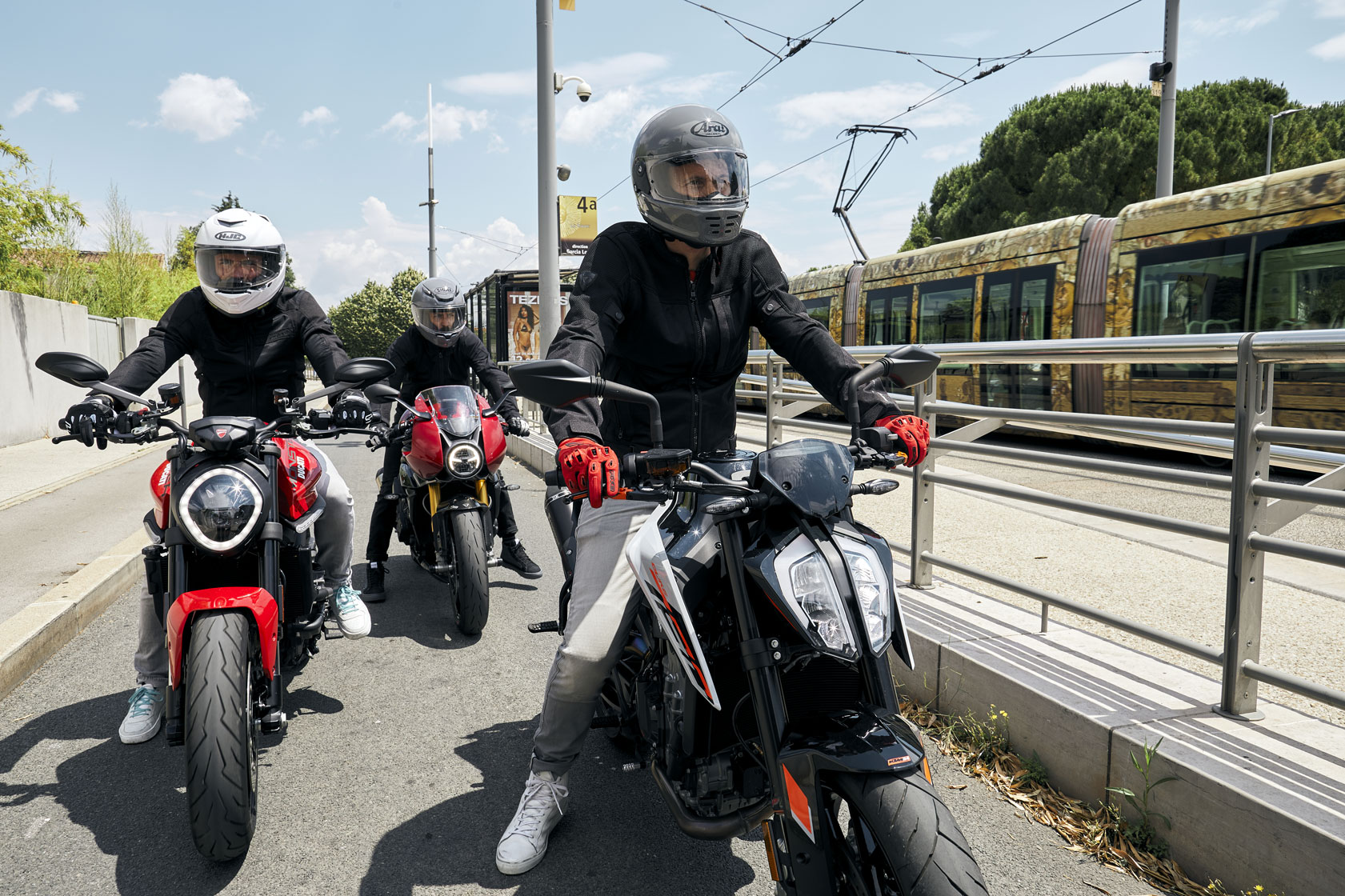
Here are three examples:
At the controls of a roadster or sport bike, which, by definition, you’ll only ride on asphalt and in an exclusively seated position, you’ll want to protect yourself from the risks of a high-speed fall with shells inspired by helmet technology, including rigid outer elements and soft inner ones, or with semi-soft shells on the palm, along with a number of leather or synthetic (TPU, TPR, etc.) reinforcements.
When you’re riding a trail/adventure type motorcycle, which is ridden mainly on the road but also on trails, requiring a variety of both standing and seated positions, the focus for palm protection is on the potential of taking a spill on the asphalt, with a large, soft Aramid abrasion-resistant panel that allows for movement and shifts in vertical position. This is more comfortable in a standing position than a palm slider, which is found on road motorcycle gloves.
When you’re at the controls of an enduro motorcycle , which is ridden primarily on dirt in a standing position, in conditions that can generate major perspiration from a rider, a glove should feature components that foster ventilation, plus protective elements to reduce the risk of injury in a natural environment that may come from tree branches, rocks, mud, etc.
And so, it’s essential to analyze your needs depending on the type of motorcycle you’ll be riding and your preferences in terms of riding position (mostly seated or mostly standing, or a mix of the two).

2/ The season in which the motorcycle glove will be worn
Some motorcyclists ride year-round, and others only when the weather is nice. Nevertheless, there are indeed four seasons: spring, summer, autumn, and winter. Each of them has a different personality (milder or sharper), depending on the part of the world or the country (North or South) you’ll find yourself in. Therefore, it’s best to take this into account to truly understand what you need.
No single glove can promise comfort and effectiveness throughout the year. So, we recommend that you own several pairs of FIVE motorcycle gloves, each one adapted to the riding conditions you’ll face as seasons change.
A/ For riding your motorcycle “most of the time”: standard motorcycle gloves
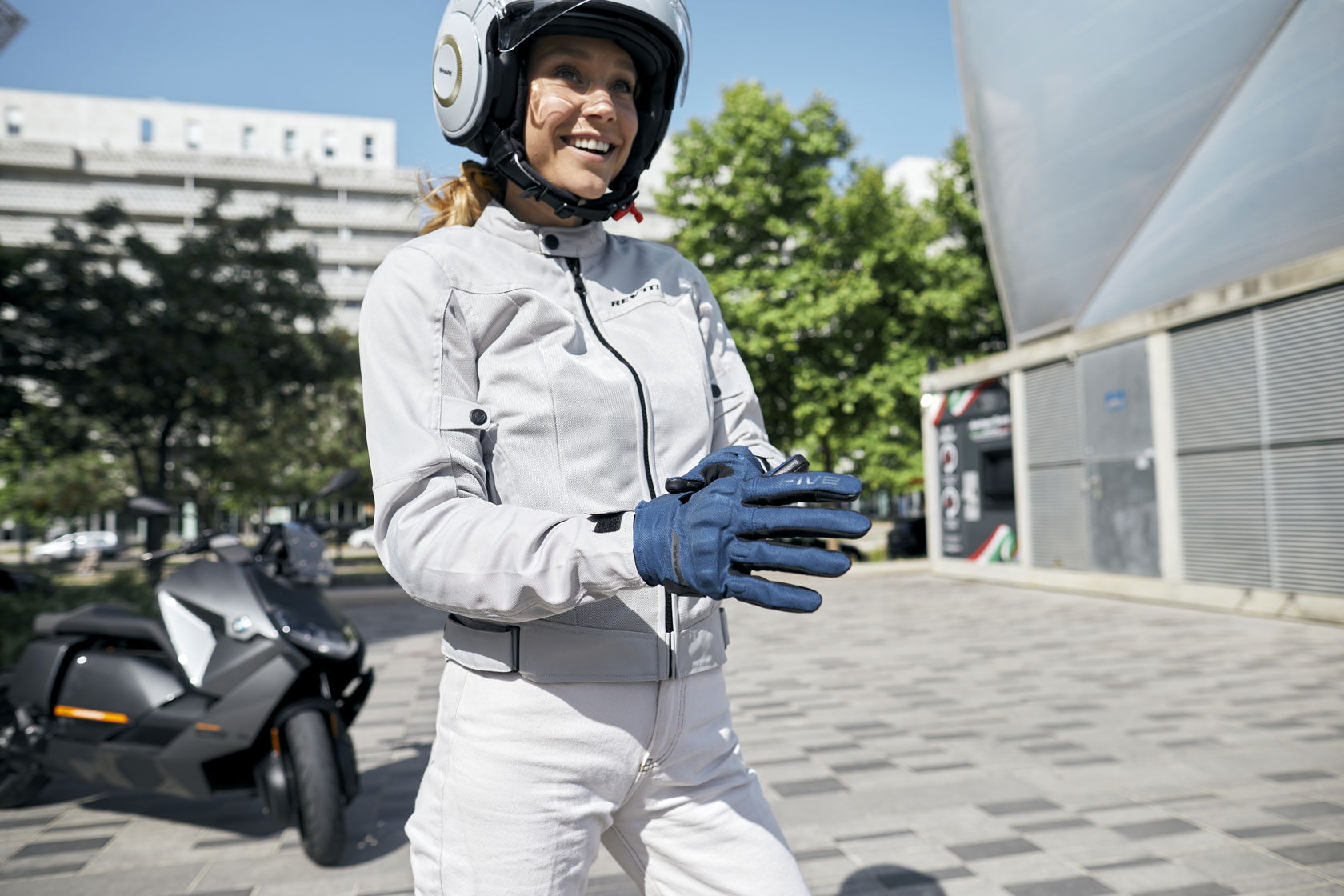
Most of our gloves are made for multi-purpose use from springtime through autumn. The design of our standard glove emphasizes comfort and efficiency in dry weather and comfortable temperatures (not too hot or too cold). These don’t feature waterproof membranes or thermal insulation.
You can find our standard gloves on our website using the tag “summer glove” in the search box.
B/ For riding your motorcycle in the summer or when it’s hot outside: ventilated
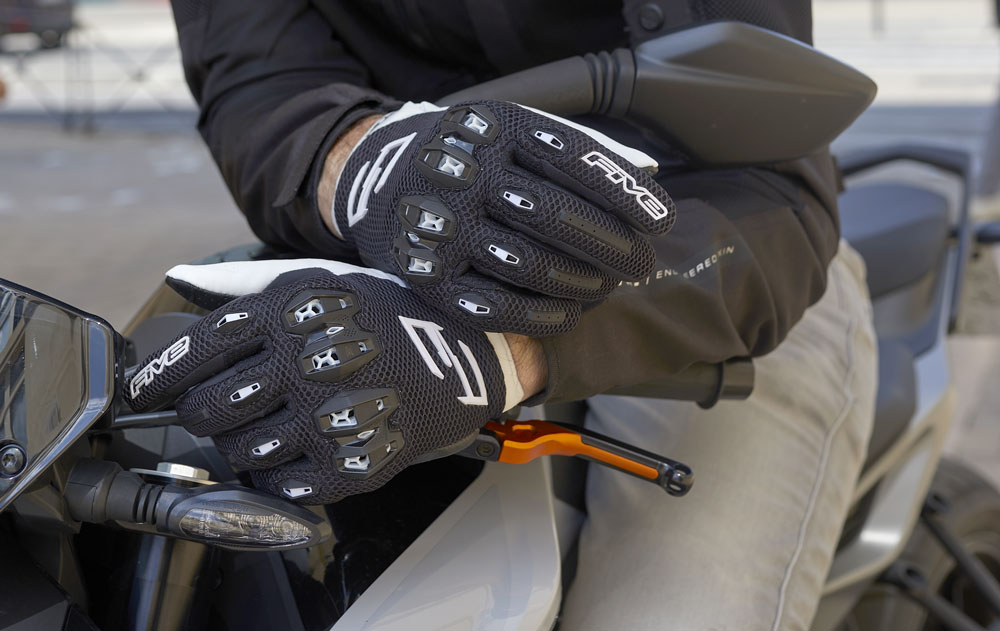
For summertime and when it gets really hot, we’ve created specific ventilated motorcycle gloves that foster airflow and the evaporation of perspiration. They feature honeycombed fabric, micro-perforated leather, and protective elements that include openings or vents to help move air from the inside to the outside of the glove.
You’ll recognize them from the AIRFLOW suffix on their name.
You can find our ventilated gloves on our website using the tag “ventilated” in the search box.
C/ For riding your motorcycle when it’s cool or rainy outside: waterproof motorcycle gloves (or mid-season gloves)
Waterproof gloves, also known as mid-season gloves which are found in each of our FIVE glove families, are the ones we recommend for springtime or autumn use, when it’s getting cooler outside or there’s an increased risk of showers.
These are waterproof motorcycle gloves that feature a breathable, waterproof membrane tto protect you from the rain, butwithout thermal insulation (except, in a few cases, lightweight insulation), so your hands don’t overheat when temperatures are still fairly mild.
The breathable waterproof membrane is like a laminated, micro-perforated covering that’s integrated into the inside of the glove, just over its outer structure, with “pores” that are large enough to allow the water vapor formed by perspiration to evaporate (which we call “breathable”), and small enough to stop drops of rain from getting inside (which we call “waterproof”).

The waterproof membrane also acts as a windbreaker, which is enough to make this type of glove more pleasant than a standard glove when it’s simply cool outside, in the morning or evening, for example.
The construction of this membrane can come in two different forms. It can be partly bonded or fully bonded to the palm, which influences the feel on the controls. High-end membranes that are fully bonded may seem a bit more rigid at first, but they offer better grip. These are, therefore, highly recommended.
You can recognize the waterproof or mid-season motorcycle gloves in the FIVE collection from the WP (for WaterProof) or GTX (for Gore-Tex) suffix attached to their name.
You can find our waterproof mid-season gloves on our website using the tag “mid-season” in the search box.
D/ For riding your motorcycle when it’s cold outside: winter motorcycle gloves
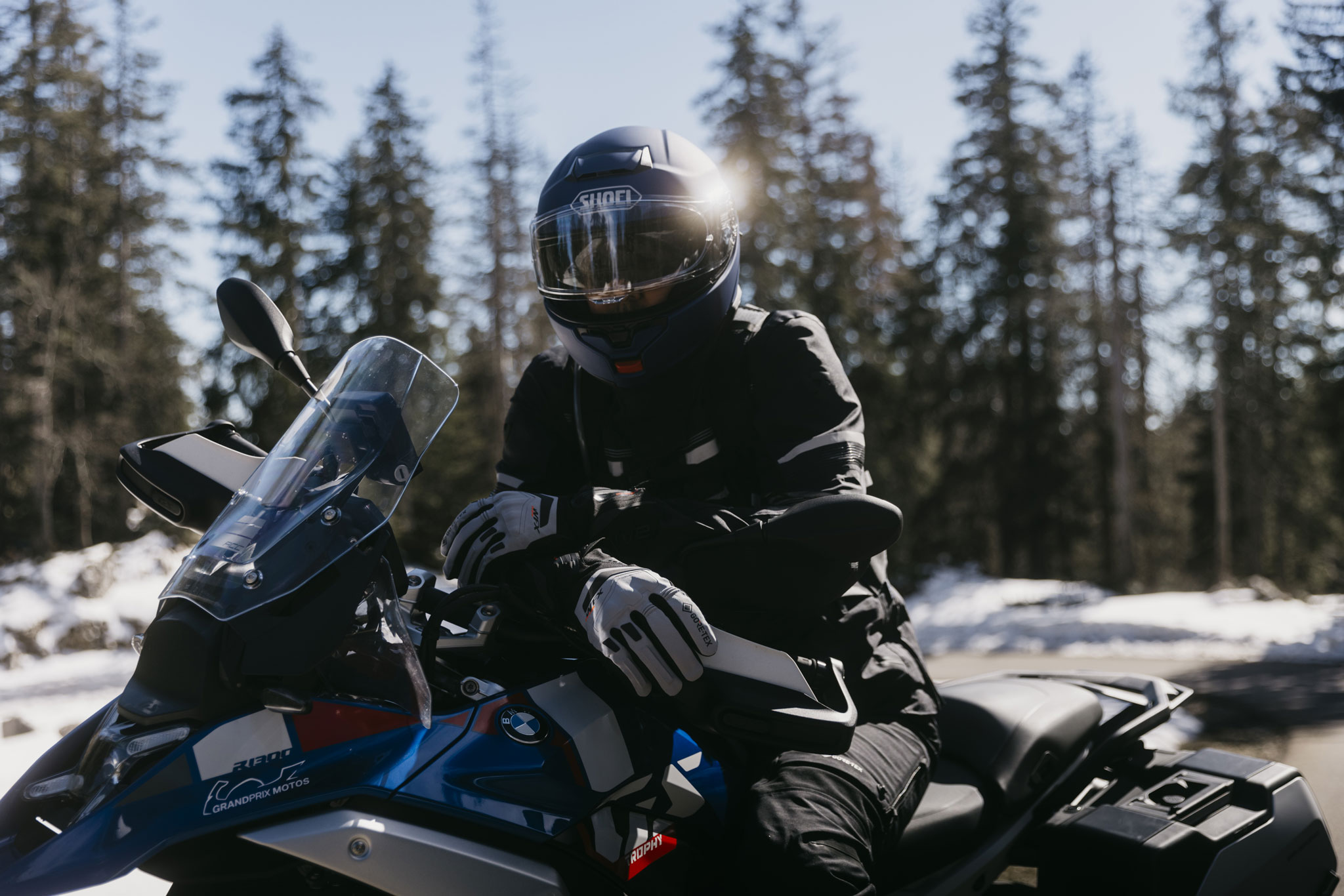
FIVE winter motorcycle gloves all offer similar characteristics, offering varying degrees of effectiveness depending on their price level and positioning within the range.
Namely, a waterproof, breathable membrane to protect against rain and keep hands dry (see above), enveloping thermal insulation designed to delay the effects of cold.
Thermal insulation is an insulating layer that wraps around the internal structure of the glove. It’s a sort of synthetic wadding that traps the air inside and is the best insulating material to retain the heat that’s naturally generated by a rider’s hands. There are varying types and levels of quality for this wadding, which can be distinguished by their weight per m². (E.g.: 170 g, 80 g, etc.) A higher number denotes thicker or denser padding.
But this weight number alone doesn’t reflect its insulating power. The very construction of the thermal insulation and its bonding inside the glove influences its insulating properties. Using different thicknesses of padding on the topside, palm, and inside the fourchettes (between the fingers), FIVE has therefore innovated by creating a brand-new type of thermally insulated construction called Thermo+, which is used in certain styles.
Considering that air is the finest of insulating elements, we advise you to choose a winter glove on the large side, rather than too small or too tight. It’s better to select one size larger, rather than a size smaller, than your usual size for standard gloves.
You can recognize FIVE’s winter gloves by the WFX prefix (for WINTER FIVE eXPERTISE) at the beginning of their names.
You can find our winter gloves on our website using the tag “winter” in the search box.
E/ For riding your motorcycle when it’s freezing outside: battery-heated motorcycle gloves
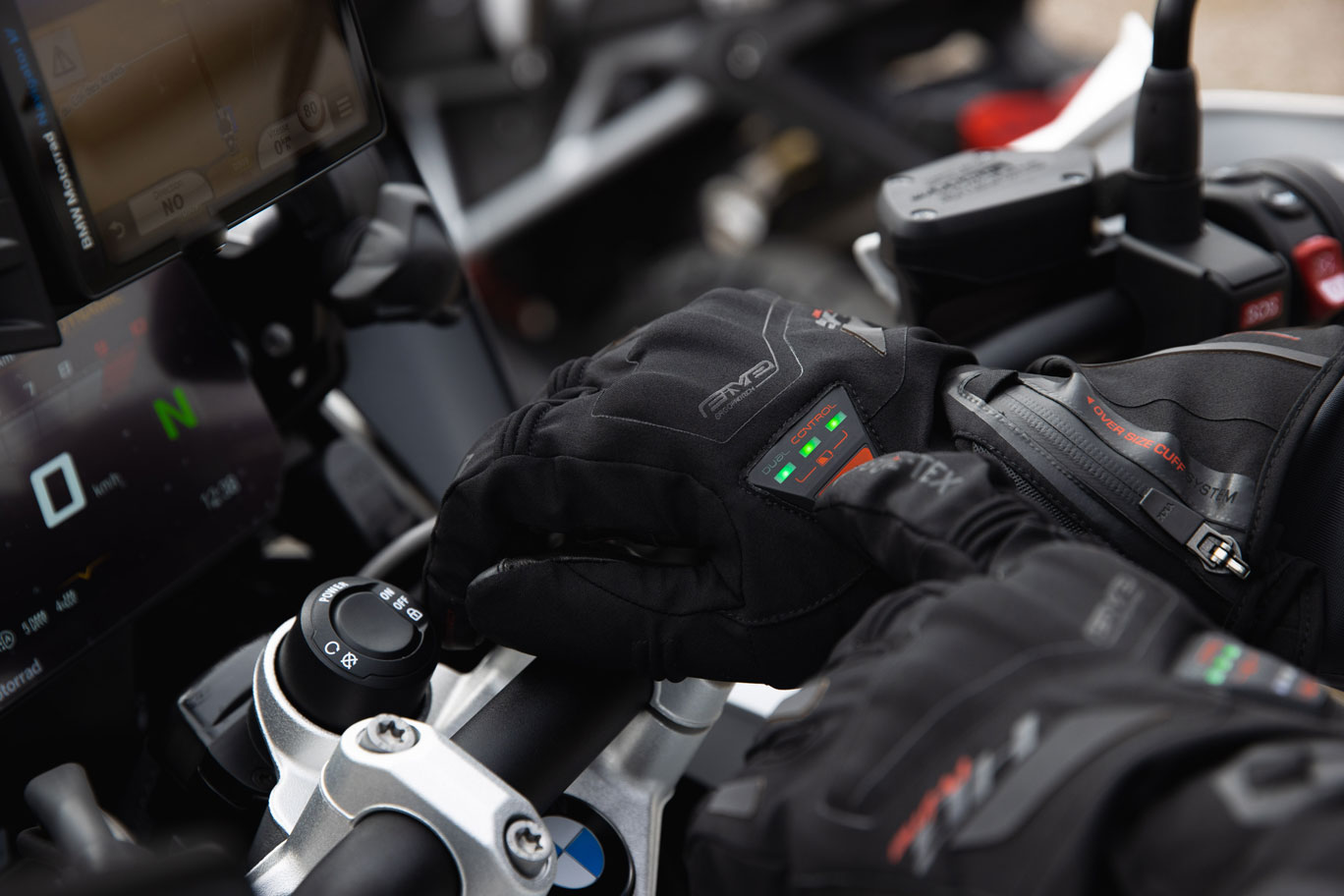
For those facing the most extreme cold or who want to ride with peace of mind in the winter, we offer battery-heated motorcycle gloves.These are gloves that feature characteristics typically found in winter motorcycle gloves (a waterproof membrane and thermal insulation), to which an electrical heating system has been added on the topside of the hand, down to the ends of the fingertips and the inside of the last knuckle. The current comes from a battery that’s integrated into each glove (providing 2-6 hours of power), or from a cable connected directly to the motorcycle (with a cigarette lighter plug or battery), for unlimited power.
You can recognize them from their HG prefix (for HEATED GLOVES) at the beginning of their name.
You can find our battery-heated gloves on our website using the tag “heated” in the search box.
3/ The average distance you’ll be covering
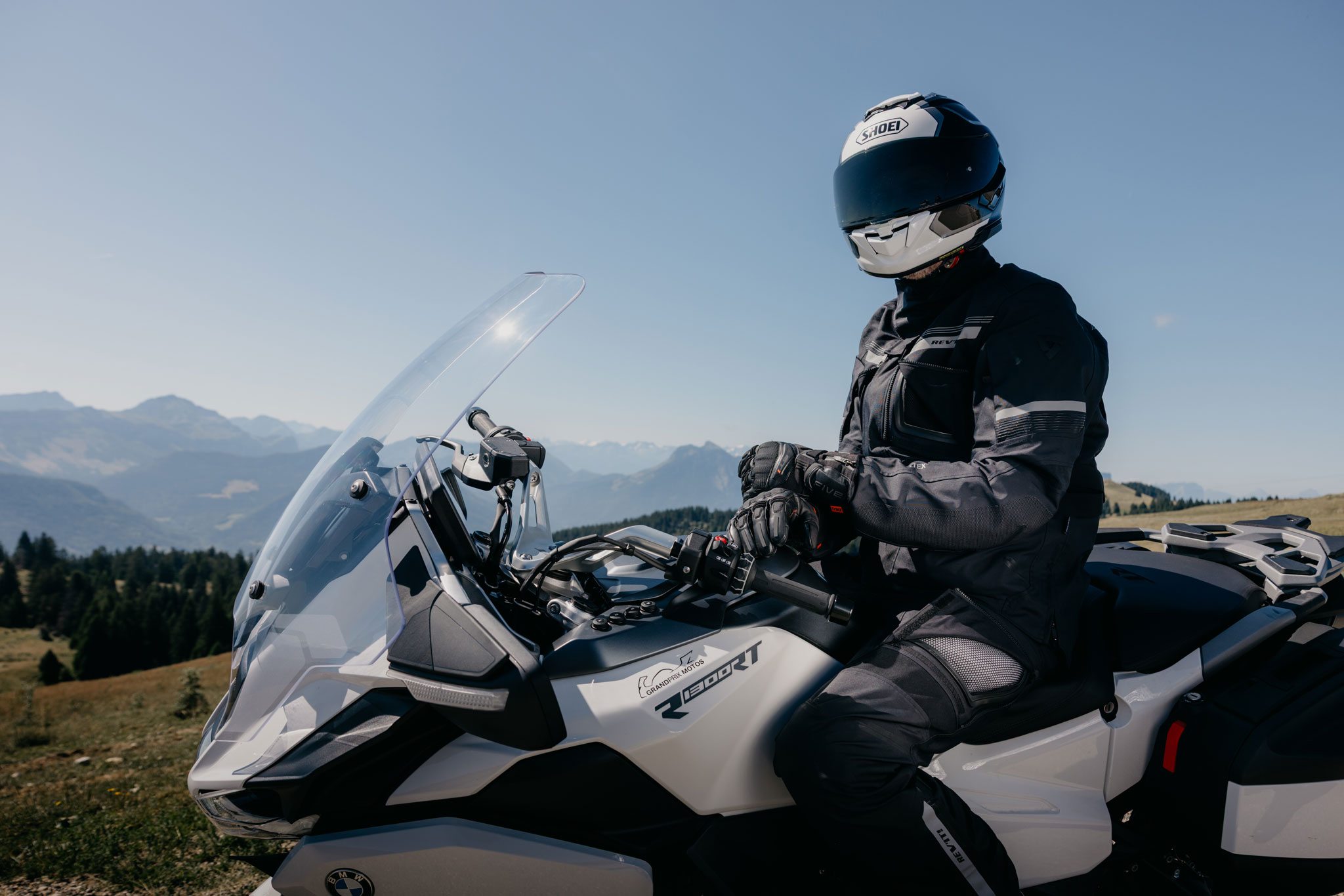
You can ride a motorcycle for practical purposes, for pure fun and enjoyment, or a bit of both, for city jaunts or long-distance travel. And this can influence the time you spend riding.
You don’t use the same equipment for everyday rides lasting several kilometers to and from the office, for example, as for a long journey on the open road or highway.
So, your focus will be on the practical side of things, such as a simple closure system, or a glove that’s easy to slip on and off and is lightweight and not too bulky, in the first case, or instead, safety and comfort factors over long distances, including waterproofness and protection, in the second situation.
Some motorcycle gloves are designed specifically for long-distance wear and are optimized to provide comfort and effectiveness over many hours spent riding. Such is the case of our TOURING family of gloves.
4/ Long cuff or short cuff?
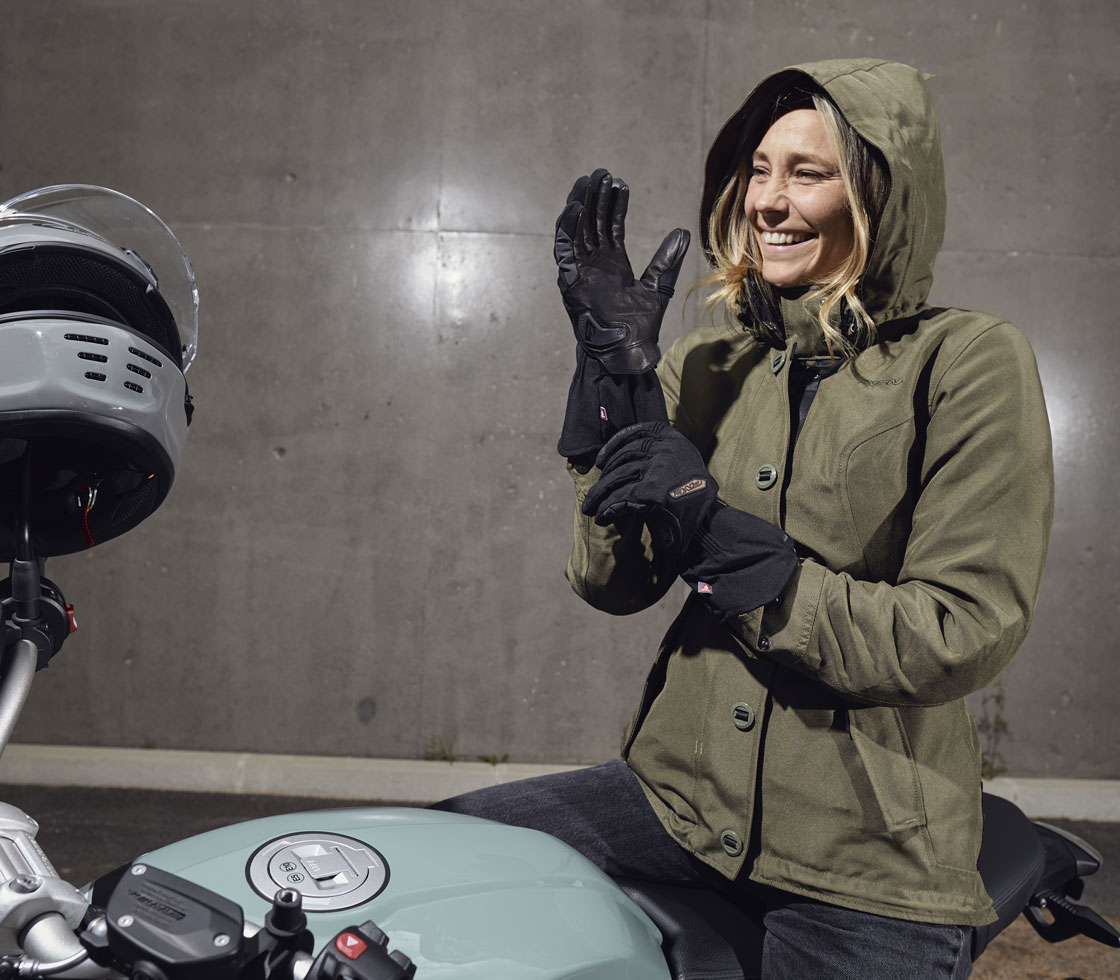
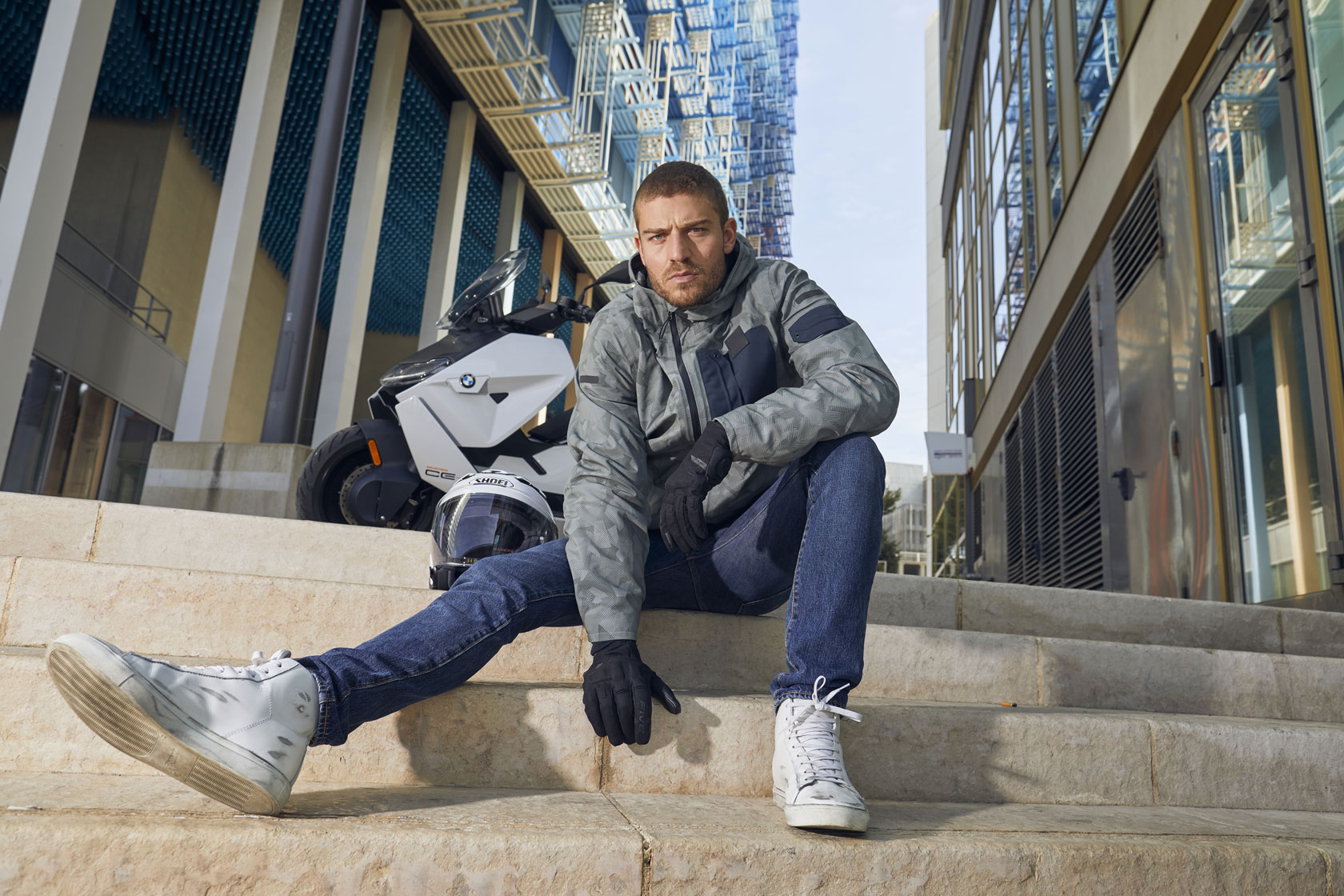
If you use your motorcycle for short trips, you’ll undoubtedly prefer gloves with a short cuff, which are light on bulk and easy to slip on and off. These are often preferable for urban or suburban use (on a scooter, roadster, etc.) or for all-terrain rides (trail/adventure, enduro, etc.).
Motorcycle gloves with long cuffs are better for road use or for riding around a racetrack, for obvious reasons related to safety, since they cover part of the forearm. They are often popular for use in the winter, because they allow riders to place the cuff over- or underneath their jacket, to keep the cold and rain out.
5/ Frequency of use (or, when to change your pair of gloves)
Frequency of use is a decisive factor when you’re choosing a style of motorcycle gloves, but also in terms of the number of pairs you may acquire.
As a piece of personal protective equipment, motorcycle gloves are an everyday product that can be considered a “consumable”, which you’re supposed to wear each time you ride your motorcycle. They’re even required and must be specifically certified and labeled “CE moto” for riding on public roads in certain countries, such as France.
Due to friction during use and their exposure to perspiration, repeated, limited movements that their structure undergoes, and exposure to the elements (rain, wind, cold, heat, pollution), straightforward, normal use of motorcycle gloves inevitably leads to natural wear-and-tear, which is considerably accelerated by repeated daily use.
Their protective properties may be reduced if wear becomes excessive. Therefore, it’s best not to wait until the pair of gloves is totally worn out to replace them. It’s crucial to check how your gloves are doing over time and identify any elements that are showing signs of wear or vulnerability that can limit their effectiveness if you have an accident.
For example, a tear may start to appear, a seam may begin to open up, or a protective element may start to wear out. All of these aspects tied to natural wear-and-tear can help you spot when a glove has seen better days and when it’s best to change it.
Just as you wouldn’t wear the same pair of shoes every day, you’ll want to think about owning several pairs of gloves if you ride regularly. By alternating between several different pairs, you’ll lengthen their lifespan considerably. This will allow each pair of gloves to fully air dry naturally between uses and prevent them from undergoing the same stresses every day (perspiration, stretching out the structure, which can lead to cracks or tears, etc.).
To put it simply, the more often you ride, the more we recommend you alternate between several pairs of gloves; even if this means a larger initial investment, you’ll come out ahead over time.
6/ The certification level and the protection vs. comfort
No glove can offer 100% protection from an accident. That being said FIVE gloves are designed to limit the risk of injury, and they all fulfill the requirements of CE Moto certification (with the corresponding label sewn on the inside, featuring the Moto pictogram that is compulsory in some countries), at three different levels:
- CE ( motorcycle gloves motorcycle protective shell)
- CE KP1 ( motorcycle gloves motorcycle protective shells, good level of protection)
- CE KP2 ( motorcycle gloves motorcycle protective shells, superior protection)
Though the certification level constitutes a valid indicator of a certain level of protection offered by the glove, since it has successfully passed certain mechanical (abrasion, tearing, cuts) and chemical safety tests (PH, etc.), before receiving the CE Certified Motorcycle Glove designation, there can still be differences between two gloves that receive the same level of certification.
Just as not all helmets that fulfill certification standards protect riders in the same way, all gloves that are KP1 CE certified, for example, don’t offer the same level of protection.
This may seem obvious, but the overall level of protection varies between styles of gloves, depending on the type of shells, reinforcements, and materials they feature.
The same is true for the level of comfort, which may vary from one style to another, even if the fundamental level of comfort offered by FIVE gloves is far superior to your average glove on the market.
So, it’s essential to evaluate the protection-to-comfort ratio that’s most suited for your use of the gloves, or for your own preferences.
Are comfort or protection, or even other criteria, such as the aesthetics of the glove, more important to you? Or are you looking for the best possible compromise between these factors? This may be the case as you move into more premium products, because high-end motorcycle gloves often offer the best possible components for both comfort and protection.
You can rest assured that our mission at FIVE is to offer the best possible balance between these elements and make a protective glove as comfortable as possible, or a comfortable glove as protective as it can be.
The easiest way to evaluate this is, once again, to try on FIVE gloves in-store, so you can compare them to each other and against the competition.

5/ Your budget
Once you’ve considered all the aspects that should help you make your choice (see above), one essential point remains: the amount of money you’re willing or able to spend on your pair(s) of motorcycle gloves.
You may begin your search with a budget as your top priority. If this is the case, we encourage you to compare the products that seem affordable to you, to ensure that they perfectly suit your needs (by examining the points mentioned above). And don’t hesitate to choose a slightly more expensive glove style if it “checks more boxes”. It’s often worthwhile to move up the scale pricewise. A few dozen euros more can sometimes open the door to a superior category with more features. This small financial effort can pay off, providing you with greater comfort, performance, and safety.
You’ll notice that there are gloves at all price levels, including within our FIVE collection. Our prices range from around 30-ish euros to nearly 450 euros. These differences can be explained by the very nature of the elements that make up the glove, whether we’re talking about elements for comfort, protection, or practical aspects.
Regardless, you can be sure of one thing: for the same price as the competition, a FIVE glove often offers much more, in terms of quality components, comfort, fit, protection, and design!